Fairy tales have fascinated people for generations, and their characters often have names that reflect their unique stories.
Learning how these names are translated into Chinese not only boosts your language skills but also gives you insight into how different cultures interpret these timeless stories.
Let’s explore 6 famous fairy tale characters and the meaning behind their Chinese names!
Snow White 白雪公主
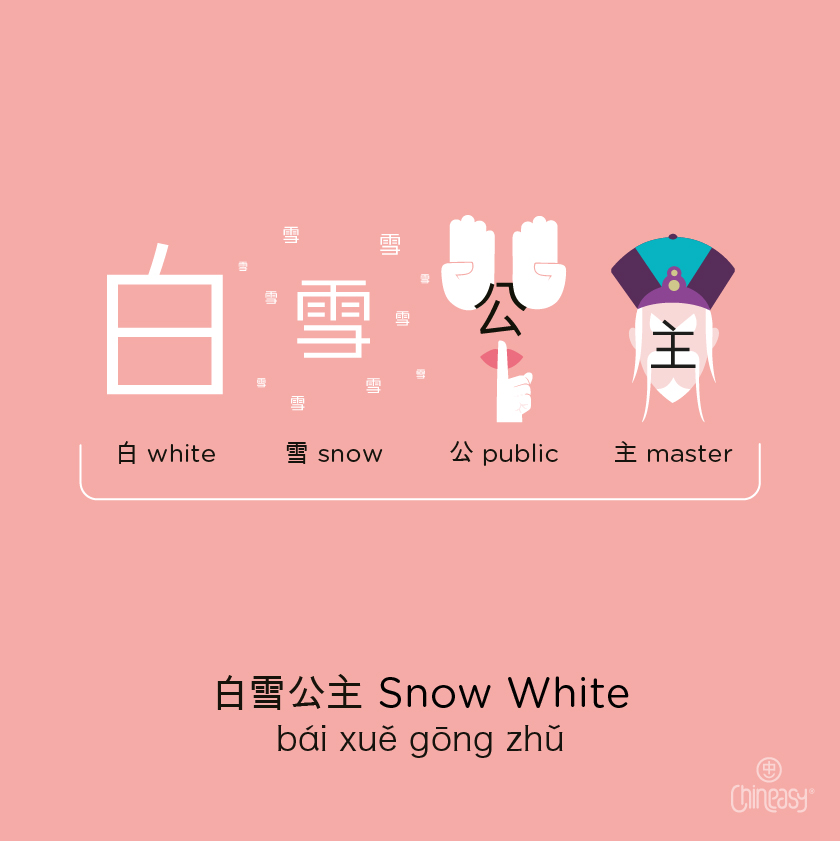
In Chinese, Snow White is called 白雪公主 (bái xuě gōng zhǔ), which breaks down as:
• 白 (bái) – white
• 雪 (xuě) – snow
• 公主 (gōng zhǔ) – princess
This name directly translates to “White Snow Princess,” emphasizing her fair and pure nature. The term 公主 originally referred to the daughters of Chinese emperors, reinforcing her royal status.
Unlike some translated names, Snow White’s Chinese name keeps the original meaning and imagery almost exactly the same.
Mermaid 美人魚/美人鱼
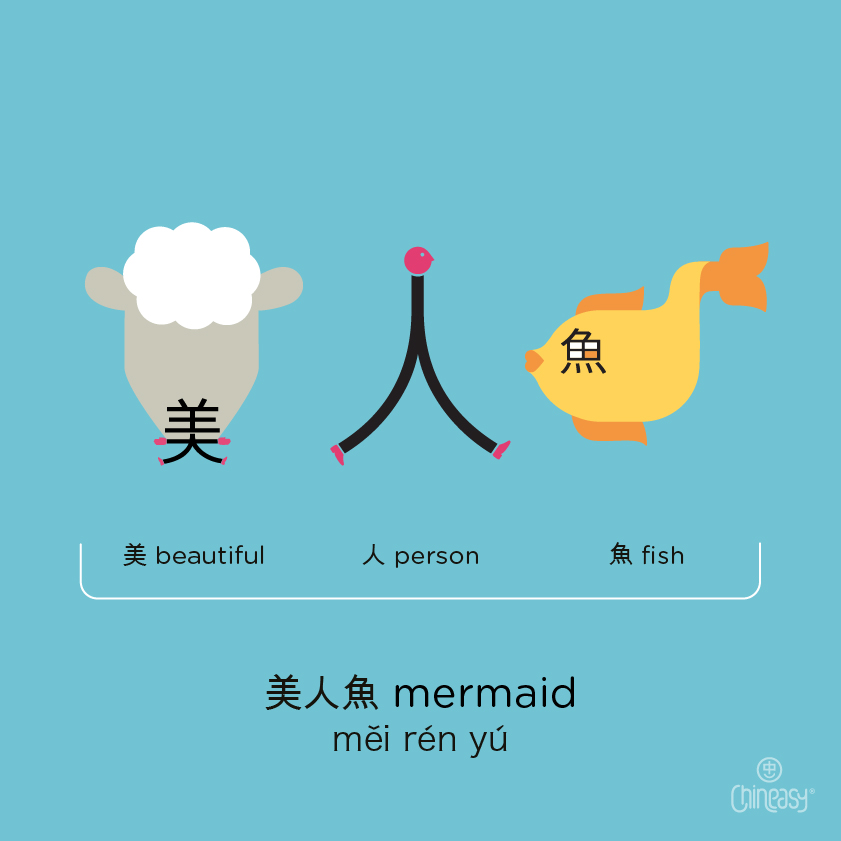
The Little Mermaid’s Chinese name is 美人魚/美人鱼 (měi rén yú), which means:
• 美 (měi) – beautiful
• 人 (rén) – person
• 魚/鱼 (yú) – fish
This translates to “Beautiful Person Fish,” focusing on the mermaid’s graceful appearance. Interestingly, the Chinese name highlights her beauty, while the English name emphasizes her small size (“little”).
Prince Charming 白馬王子/白马王子
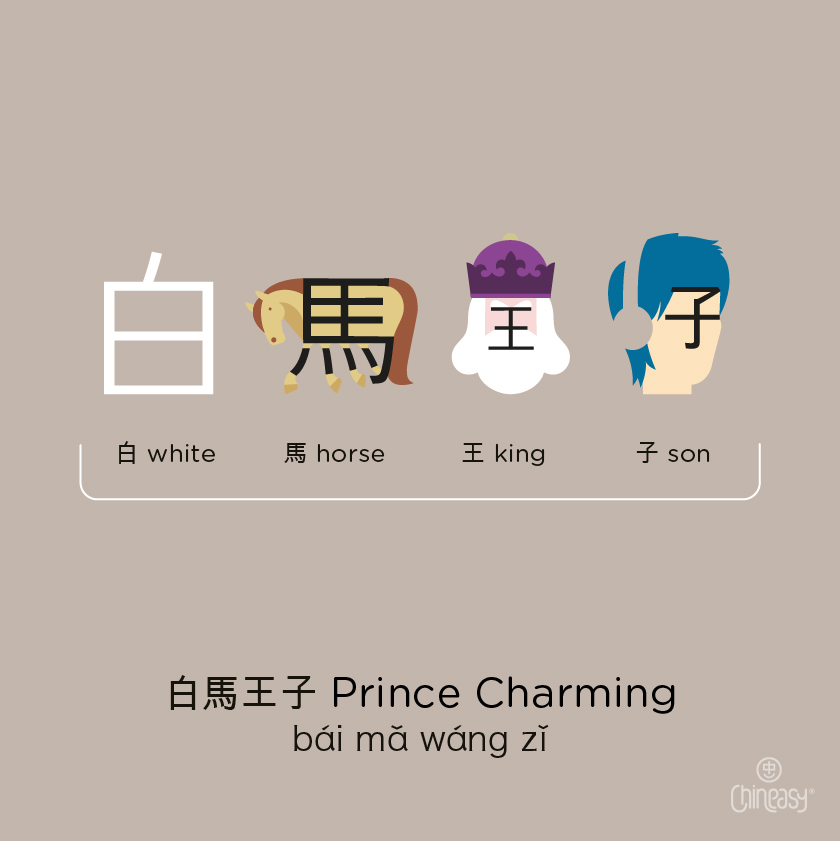
The Chinese phrase for Prince Charming is 白馬王子/白马王子 (bái mǎ wáng zǐ), which literally means “White Horse Prince”:
• 白 (bái) – white
• 馬/马 (mǎ) – horse
• 王子 (wáng zǐ) – prince
This name paints the classic image of a noble prince riding a white horse, ready to rescue the heroine.
Today, 白馬王子/白马王子 is a common Chinese idiom used to describe an ideal romantic partner—handsome, noble, and kind.
This translation goes beyond fairy tales and has become part of modern language and culture.
Little Fairy 小仙子
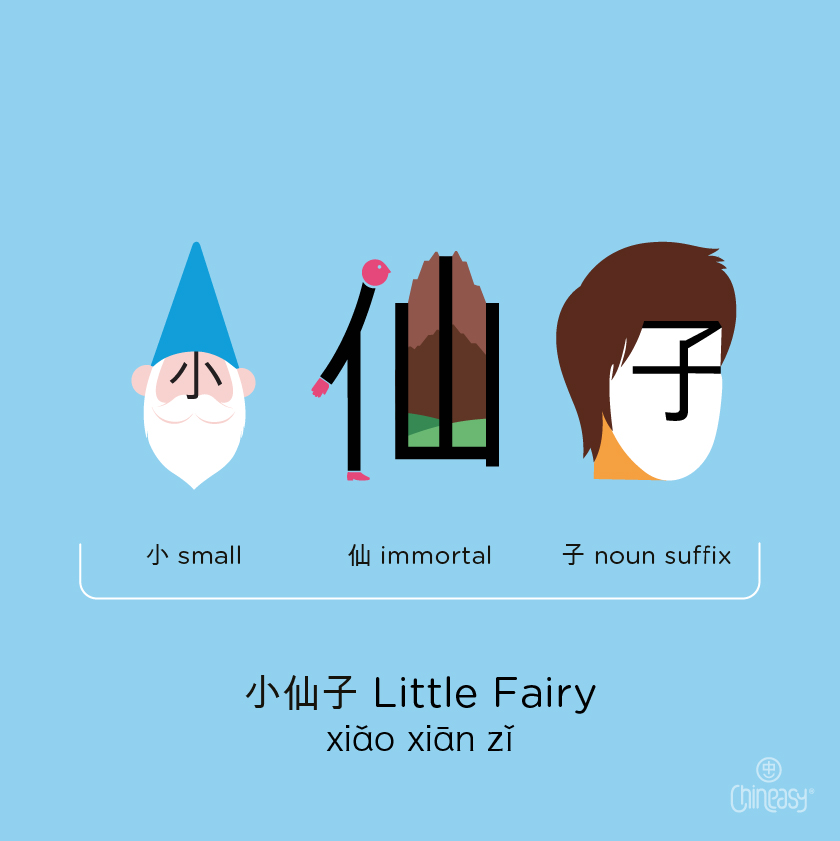
Tinker Bell, the beloved fairy from Peter Pan, is known as 小仙子 (xiǎo xiān zǐ) in Chinese:
• 小 (xiǎo) – little; small
• 仙子 (xiān zǐ) – fairy
This name means “Little Fairy” and perfectly matches Tinker Bell’s small size and magical nature.
The word 仙子 refers to celestial beings in Chinese folklore, similar to fairies in Western stories.
Interestingly, 仙 (xiān) is often linked to immortals and supernatural beings in Daoist legends, adding a cultural layer to Tinker Bell’s Chinese name.
The Little Prince 小王子
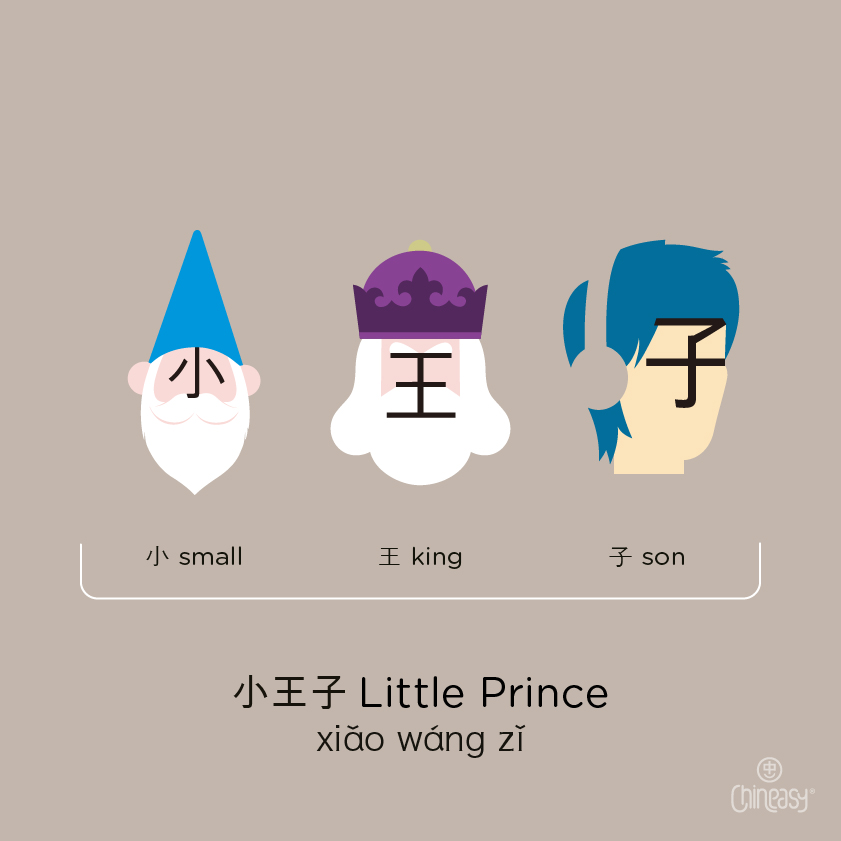
The Little Prince from the famous French novella is called 小王子 (xiǎo wáng zǐ) in Chinese:
• 小 (xiǎo) – little; small
• 王子 (wáng zǐ) – prince
This is a direct translation, preserving both the meaning and essence of the character.
The Little Prince is widely recognized in China, and his Chinese name instantly reminds readers of the philosophical journey and deep reflections from the original story.
Cinderella 灰姑娘
Cinderella’s Chinese name is 灰姑娘 (huī gū niáng), which means:
• 灰 (huī) – ash, gray
• 姑娘 (gū niáng) – girl, maiden
This name literally means “Ash Girl” or “Gray Maiden,” referring to how Cinderella sits among the ashes before her transformation.
The Chinese word 姑娘 was historically used for young, unmarried women, which fits Cinderella’s story.
Unlike the English name, which focuses on the “cinder” aspect, the Chinese name captures both her humble past and her youth.
What These Names Tell Us About Language and Culture
Translating fairy tale names isn’t just about swapping words—it reflects different cultural perspectives. Here are some key insights:
- Cultural focus – The Little Mermaid’s Chinese name emphasizes beauty rather than size.
- Modern language influence – Prince Charming’s name has evolved into a common idiom for an ideal partner.
- Character meaning – Cinderella’s name highlights both her hardships and her status through the word 姑娘.
Learning how fairy tale characters’ names are translated into Chinese makes language learning more fun and insightful.
Next time you read a fairy tale in Chinese, pay attention to the names—you might discover hidden cultural meanings!